
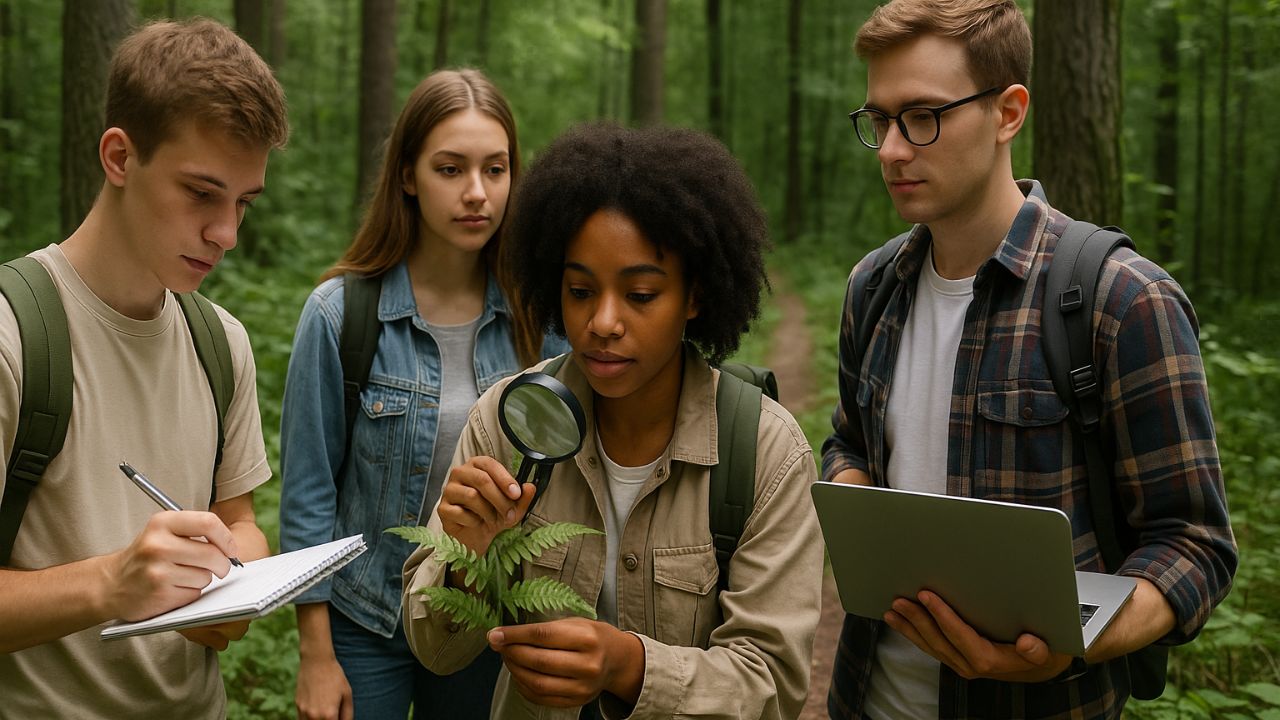
Forest Research Projects – Forests are not just natural landscapes; they are living laboratories where students can gain powerful lessons about ecology, sustainability, and community responsibility. One significant initiative that stands out in this field is the Utah Forest Dynamics Plot (UFDP) (website). The UFDP provides a platform for researchers, educators, and students to understand how forests function, change, and adapt over time. By engaging with UFDP’s long-term research, students are not only exposed to scientific data but also to real-world applications that highlight the importance of preserving ecosystems for future generations. This creates an inspiring learning journey that combines science with responsibility, encouraging students to develop an informed perspective on environmental stewardship and conservation.
Understanding the Importance of Forest Ecosystems
The first and most valuable lesson students can learn from forest research projects is the critical role forests play in maintaining ecological balance. Through research plots like UFDP, students witness how forests provide oxygen, absorb carbon dioxide, regulate water cycles, and support biodiversity. Learning about these services helps students connect classroom theories with real-world evidence. For example, monitoring tree growth, soil quality, and wildlife diversity at the UFDP allows students to grasp how interconnected natural systems are. This hands-on knowledge demonstrates that forests are not just collections of trees but intricate ecosystems where every element, from insects to large mammals, plays a vital role. Understanding this complexity equips students with a holistic approach to solving environmental challenges.
Building Research and Analytical Skills
Another significant benefit of engaging in forest research projects is the opportunity to build strong research and analytical skills. At the UFDP, students are often involved in long-term monitoring activities such as recording tree diameters, mapping forest plots, and tracking species populations. These activities teach students how to collect, analyze, and interpret data in meaningful ways. The rigorous process of observation, hypothesis-building, and testing provides them with a solid foundation in scientific methodology. Such experiences also enhance problem-solving abilities, as students learn to deal with variables like climate change, disease outbreaks, or natural disturbances that affect forest dynamics. Beyond academics, these skills prepare them for diverse careers in environmental science, forestry, and sustainable development.
Inspiring Environmental Responsibility
Forest research projects like those conducted at UFDP also instill a strong sense of environmental responsibility in students. By seeing firsthand how human activities—such as deforestation, pollution, and land-use changes—impact forests, students develop empathy and urgency for conservation. This inspiration can motivate them to adopt sustainable practices in their own lives, such as reducing waste, conserving water, or advocating for policies that protect natural resources. Moreover, participating in projects that contribute to global research networks empowers students to feel part of something larger than themselves. They realize their role in protecting ecosystems not just locally but also at a global scale. This responsibility extends beyond academic pursuits, shaping them into leaders who can influence sustainable practices in their communities.
Learning Collaboration and Community Engagement
Another vital aspect of forest research projects is the emphasis on collaboration and community engagement. At UFDP, research often involves partnerships between universities, government agencies, and local communities. Students working in such settings learn the value of teamwork, communication, and cultural sensitivity. Engaging with diverse groups allows them to understand different perspectives on forest management and conservation. For instance, learning from local communities about traditional forest practices can provide unique insights that complement scientific findings. These collaborative experiences prepare students to work effectively in multidisciplinary teams, a skill that is highly valuable in addressing global environmental issues.
Preparing for Future Careers and Global Challenges
Finally, forest research projects open doors for students to pursue meaningful careers in sustainability and conservation. With the growing demand for experts who can tackle climate change, biodiversity loss, and sustainable resource management, the skills gained from experiences like those at UFDP are highly relevant. Students who participate in such projects not only gain technical expertise but also develop a passion for solving pressing environmental problems. This positions them well for careers in academia, environmental organizations, and policymaking institutions. Furthermore, the global perspective gained through forest research ensures that they are prepared to contribute solutions to some of the most urgent challenges facing humanity today.
In conclusion, forest research projects offer students more than just academic knowledge; they provide life lessons in responsibility, collaboration, and problem-solving. The Utah Forest Dynamics Plot (http://ufdp.org) exemplifies how such initiatives can inspire young minds to appreciate the value of forests while equipping them with the tools to safeguard our planet’s future. By participating in these projects, students learn that forests are not only vital for ecological survival but also for building sustainable societies where humans and nature coexist harmoniously.